
Virgin - Lorde
By Thomas Lu '27


In certain frames of the “What Was That” music video, you can see Lorde bent forward in the center of a teeming crowd of fans, dancing along to her own music. From a distance, it might look like a mosh pit, and then you blink and remember that the woman in the middle of it all is one of the most influential pop stars of the past twenty years. There she is, simply existing among the cameras; I get the sense that she’s relishing the moment just as much as any member of the crowd. I might call that feeling the Lorde effect: a type of pop star idolatry that feels closer to mutual kinship than parasocial worship. No matter where you are, you always have a wise older sister in Lorde, and sometimes—if you live in New York City—you might be inches away from her.
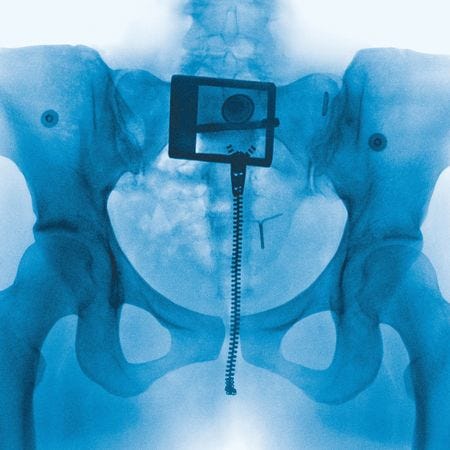
In true fashion, the Lorde on Virgin is pulling you incredibly close. Like the X-ray on the album cover suggests, there is something both bodily and technological about the album. After the folky detour of 2021’s Solar Power, Virgin returns to the kinetic drum patterns and digitized instruments of 2017’s Melodrama. But it aches: it sounds visceral and cold, where Melodrama was grand and romantic. Her body, hardly mentioned in her early work, is laid bare. Some of the first words on the album are when she ponders, “Don’t know if it’s love or if it’s ovulation,” and the album only gets more frank from there. There’s spit, sex, pregnancy scares, semen. As Lorde tells it, the body just is, fluids and all. Moments that seem abject are rendered as ordinary, revelatory even, like “Clearblue,” a two-minute vignette of a pregnancy test where a Clearblue becomes a conduit for existential meditation. It’s sung completely a cappella, just Lorde and a vocoder doubling her words, magnifying the starkness. That bodily candor continues on the following “GRWM,” where she’s washing semen off her chest, and the clinical “Broken Glass,” where she checks off her eating disorder symptoms one by one. If Melodrama was a short story, then Virgin is a diary–messily, unflinchingly honest.
But in striving for that notes-app-level honesty, the album loses some of the perspective that sets Lorde’s music apart. Some songs read like half-worked-out ideas (“Man of the Year,” “GRWM,” “If She Could See Me Now”) rather than fully realized concepts. “Man of the Year” may be the biggest culprit, a song about exploring one’s gender identity that builds and builds and then abruptly ends in a squall of feedback. The effect is cathartic, and then confusing, as if there is still more self-reflective work to be done. It may be an accurate depiction of her gender exploration thus far, but it is structurally much less successful as a song. Yet Virgin seems to aspire for that true-to-life quality above all else. That might be why we get haphazard lyrics like Lorde calling herself a “grown woman in a baby tee” or going to the gym and “exorcising / all my demons.” If I’m being generous, I interpret these moments as purposeful works-in-progress, as if Lorde is imbuing her songwriting on Virgin with her real-time process of growth. The downside to this, of course, is that the lesser revelations and sloppy humor stay intact. In written messages preceding Virgin’s release, she likened the album to “the sound of her rebirth,” and this label rings true across its eleven songs: Virgin does not present a new Lorde so much as it documents the effortful process of giving birth to one.
Thankfully, many other songs feel fully-formed on arrival. I particularly like “Hammer,” the opener, which races like a heartbeat, following Lorde as she flits from street to street in New York. She’s piercing her ears here, getting an aura picture taken there. “Some days I’m a woman, some days I’m a man,” she sings, rapturous, newly aware of the endless potential of existence. That ravenous appetite for transformation forms a through-line to “Shapeshifter,” where she cycles through versions of herself, momentarily reliving her teenage years: “I become her again / Visions of a teenage innocence / How’d I shift shape like that?” These songs epitomize the album title, which reflects a state of originality, independence, and endless possibilities. While other songs execute this theme by stripping down to their barest essentials, “Hammer” and “Shapeshifter” mutate as they progress, as if testing out possibilities in real time. It’s a thrill when the ecstatic howl of “Up-up-up-up!” on “Hammer” is met with throbbing synths and a club beat, momentarily dropping us onto the dance floor. Or when “Shapeshifter” slowly accrues strings until it explodes into orchestral breakbeats. Otherwise, Virgin can sound like a refrigerated Melodrama, as if the synths and drum patterns on that album were rendered in cooler, steelier tones. This makes the album’s conceit of “the sound of her rebirth” a bit halfhearted; if the lyrics make pains to signal her future, much of the instrumentation stays firmly rooted in her past.
It seems more accurate to say that life is full of rebirths, some overlapping, some larger than others, and Virgin operates better as a snapshot of that process rather than a fully-formed, self-sealed opus. “I’m ready to feel like I don’t have the answers,” she sings on “Hammer,” and the album embraces that unresolved space. It’s fitting, then, that the final song ends with a question: reeling from a breakup on “David,” she repeats, “Am I ever gonna love again?” When Lorde sings “David” in concert, she makes her way into the throng wearing a luminescent jacket, one voice among thousands. She sings, the crowd answers—and for a moment the uncertain space is filled.
Written by Thomas Lu ‘27
Edited by Johan Beltre ‘27
Contributions by Morgan Anderson ‘27, Eliot Geer ‘27, Johan Beltre ‘27, Blake Horne ‘26, and Dashiell Morgan ‘27